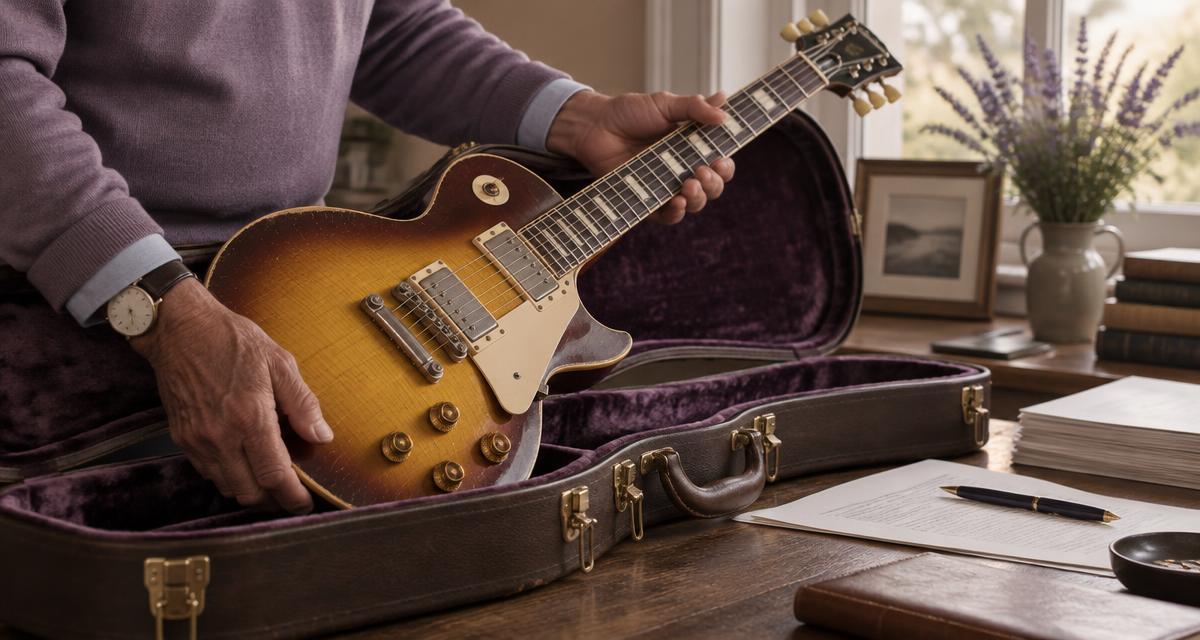
The problem nobody talks about at guitar shows
You know exactly what you own. You know the '63 is original and the reissue next to it cost $200. You know why the refret on the Telecaster doesn't hurt its value, and why the replaced pickups on the Strat do. Your family almost certainly doesn't. To a spouse or a child who doesn't play, a room full of guitars, amps and pedals is a wall of indistinguishable wood and wire — and the day they have to deal with it, they'll be grieving, busy, and relying on whoever offers to "help."
This is one of the most common and least discussed losses in the collecting world. Not theft, not fire — a lifetime collection quietly sold for a fraction of its worth because nobody left behind a clear record of what it was.
Why undocumented collections get lowballed
Buyers who work estate sales are professionals, and they can spot an undocumented collection in minutes. The pattern is always the same: a grieving family, a room of gear, no list, no values, no idea which of the twelve guitars is the one that matters. A buyer offers one number for the whole room. It sounds like a lot of money. It usually isn't.
- Everything gets averaged. A bundle offer prices the rare piece the same as the beginner guitar hanging next to it.
- Speed is used against the family. "I can take it all today" feels like a kindness when you're overwhelmed — that's the point.
- Condition and originality get renegotiated downward. Without your notes, nobody in the room can argue that the finish is original or the work was done by a respected luthier.
The uncomfortable truth: the value of a collection isn't just in the instruments. It's in what the owner knows about them. When that knowledge isn't written down, it leaves with you.
What your heirs actually need
Forget legal complexity for a moment. What your family needs is a single, dated document where each item gets a clear entry:
- Make, model and yearThe specific variant — not just “a Gibson”.
- Serial numberPhotographed, so the item can be identified beyond doubt.
- A realistic current valueBased on recent sales of the same model and condition, not wishful thinking.
- Photos from every angleFront, back, headstock, hardware, serial, any wear.
- Originality and repairsWhat's been replaced, refinished or serviced — and by whom.
- Provenance and paperworkReceipts, certificates, original case, hang tags, service history.
- Anything especially rareA note in plain language: “this one is the valuable one, don't let it go cheaply.”
- Where to sell itA pointer to the right venue — see our guide on where to sell musical instruments.
With that document in hand, an heir who has never played a note can talk to a dealer, an auction house or an insurance company from a position of knowledge instead of trust.
How to build the record, one evening at a time
- Start with the five most valuable pieces. Don't try to catalog everything in a weekend. The top of the collection is where the risk is.
- Photograph each item properly. Good light, every angle, and a close-up of the serial number. Ten minutes per instrument.
- Write down what you know. Where you bought it, what you paid, what's been done to it, and anything a buyer would need to hear from you in person.
- Attach the paperwork. Scan or photograph receipts, certificates and service records so they live with the entry, not in a drawer.
- Set a value per item. Check completed sales — not asking prices — of the same model, year and condition. An AI estimate is a useful starting point for common gear, and you stay in control of the final number either way.
- Refresh it once a year. Values move. Pick a date — a birthday, New Year — and spend an hour updating.
The same record, incidentally, is exactly what an insurer asks for if gear is stolen or damaged — see how to document a guitar for insurance and our musical instrument insurance guide. You do the work once and it protects the collection twice.
The handover: make sure the document gets found
A perfect inventory hidden in a folder nobody opens is only half the job. The other half is making sure the right person knows it exists:
- Print it. A dated paper copy with your will or other important documents is found when it matters. Digital-only records die with passwords.
- Give a copy to someone you trust. A family member, your executor, or a collector friend who can advise the family.
- Have the conversation. Fifteen minutes of "here's what this is all worth and here's the document" is worth more than any appraisal. It's also a good excuse to talk about the guitars.
- Mention the collection in your estate planning. If it's a significant asset, whoever drafts your will should know it exists and where the inventory lives.
Frequently asked questions
How do I make sure my family knows what my guitars are worth?
Leave them a written inventory: make, model, year, serial number, condition, photos and a realistic current value for each item, plus notes on anything especially rare. A dated PDF kept with your other important papers — and a conversation telling your family where it lives — is what turns a mystery room of gear into a manageable estate.
Should my guitar collection be mentioned in my will?
A valuable collection is worth discussing with whoever handles your estate planning. Wills typically cover who inherits; what they usually lack is the detail of what each item is and what it's worth. That documentation lives best alongside the will as a separate, regularly updated inventory your executor can actually use.
What happens to a guitar collection with no documentation?
Typically one of three things: the family sells quickly to the first buyer who shows up, often far below market value; the collection sits untouched for years while the family avoids the problem; or disagreements start over who gets what. Buyers who purchase from estates know exactly how to spot an undocumented collection.
How often should I update the values in my inventory?
Once a year is a good rhythm, plus whenever you buy, sell or modify something significant. Vintage and collectible markets move, and an inventory with ten-year-old values can mislead your heirs almost as much as no inventory at all.
Can my heirs access my AxeProtector inventory if something happens to me?
Your inventory exports to a professional PDF report you can download anytime — print it, keep a copy with your will, and give one to a trusted family member. That way the information doesn't depend on anyone knowing a password.
This page is general guidance on documenting a collection, not legal, tax or financial advice. For wills and estate questions, consult a qualified professional in your jurisdiction. See our Disclaimer.